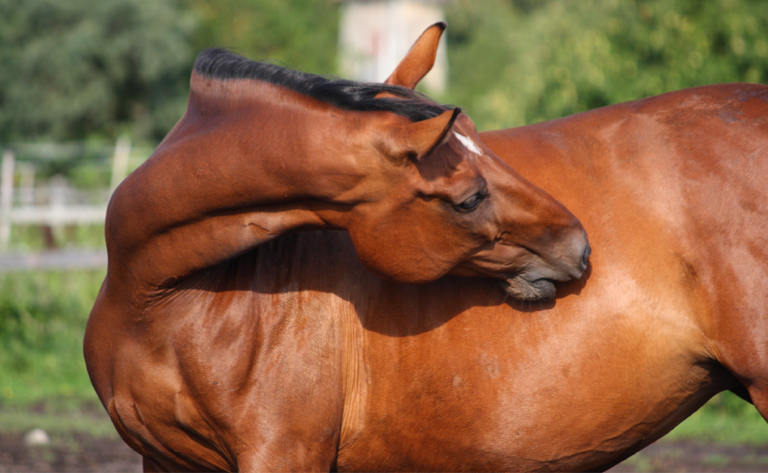
Back problems causing poor performance and lameness in horses are often referred to as, simply, “back pain.” Tena Ursini, DVM, PhD, CERP, DACVSMR, Assistant Professor at University of Tennessee’s Equine Performance and Rehabilitation Center, has coined the term “topline dysfunction” to more accurately describe this complex condition. During a presentation at the 2025 American Association of Equine Practitioners Convention in Denver, Colorado, she described the causes of topline dysfunction and how to evaluate and address it.
Intrinsic and Extrinsic Factors
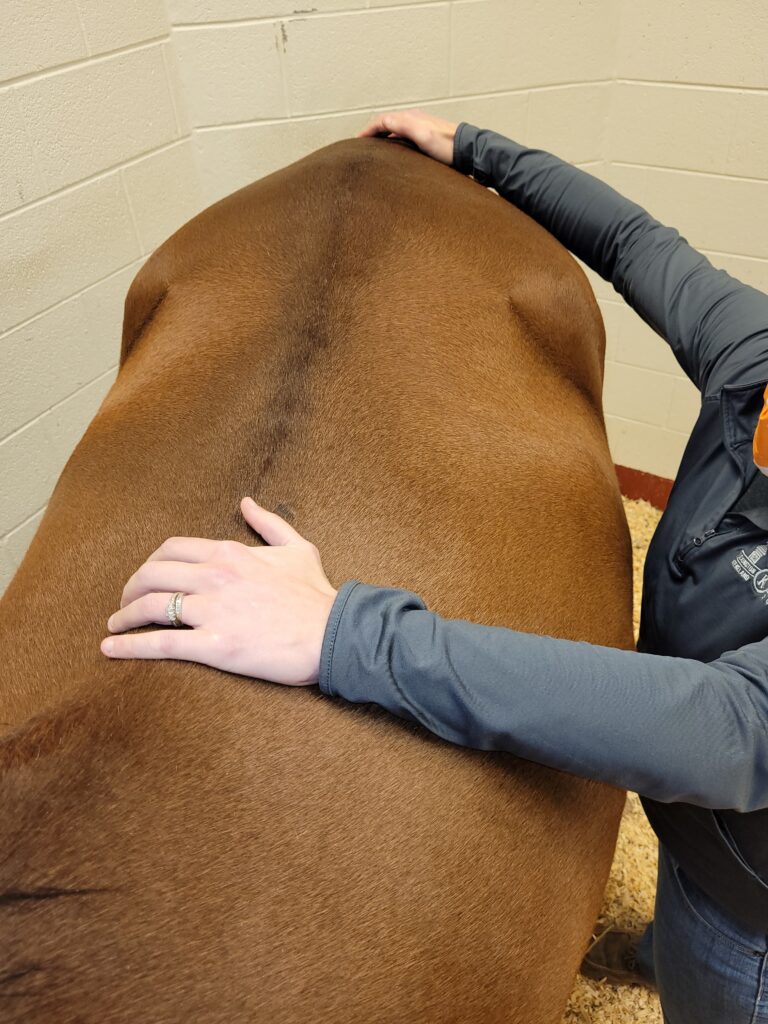
Ursini described three main components of back issues: weakness; hypomobility or stiffness; and generalized pain. While horse conformation can lead to dysfunction, incorrect plantar angles that cause hind-limb lameness also can contribute by altering spinal motion patterns. Another possible cause of topline dysfunction can occur in young horses that are overworked and not strong enough to carry the load or in older horses with spinal osteoarthritis.
Besides these intrinsic factors, external factors also can lead to topline dysfunction. A horse and rider mismatch where the rider and tack combined weight exceeds 20% of the horse’s weight is one factor. Asking the horse to perform something it cannot do is another. A rider who allows a horse to move in a strung out posture limits the horse’s use of its abdominal muscles to lift the back as they should. Any discipline that promotes a lordosis posture doesn’t enable muscles to build correctly to keep the spine mobile. And, saddle fit is always a potential problem.
Assessing the Horse
It’s important to assess the horse’s topline for muscle fluidity, muscle symmetry or abnormalities, balance, and whole body control, said Ursini. Does the horse experience spasms when the back is engaged? Does the horse respond normally to a sternal or pelvic lift? When using baited carrot stretches, does the horse have sufficient range of motion to reach the elbow, flank, stifle, or hock for a sufficient time to grab the treat, or is he evasive because he doesn’thave the mobility to stretch and reach?
Stretches and Exercises
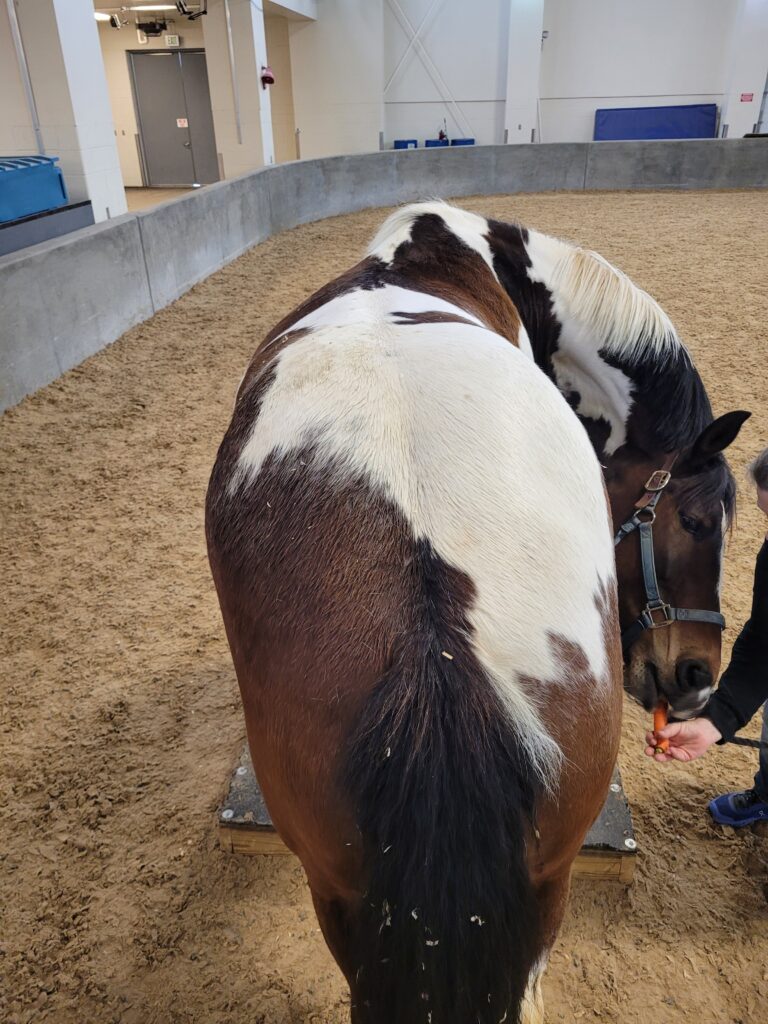
Baited stretches help with hypomobility and stiffness. Dynamic exercises are also important, such as asking the horse to perform serpentines that cause his back and torso to be mobile as he bends around blocks or cones. Ursini recommends placing the cones at a distance that prevents the horse from swinging his butt out in avoidance of using his back. Other dynamic exercises include leg yield in hand rather than under saddle, because the horse might be too weak to carry a rider. Placing a hand on the horse’s side replicates leg position to ask for bending and sideways movement.
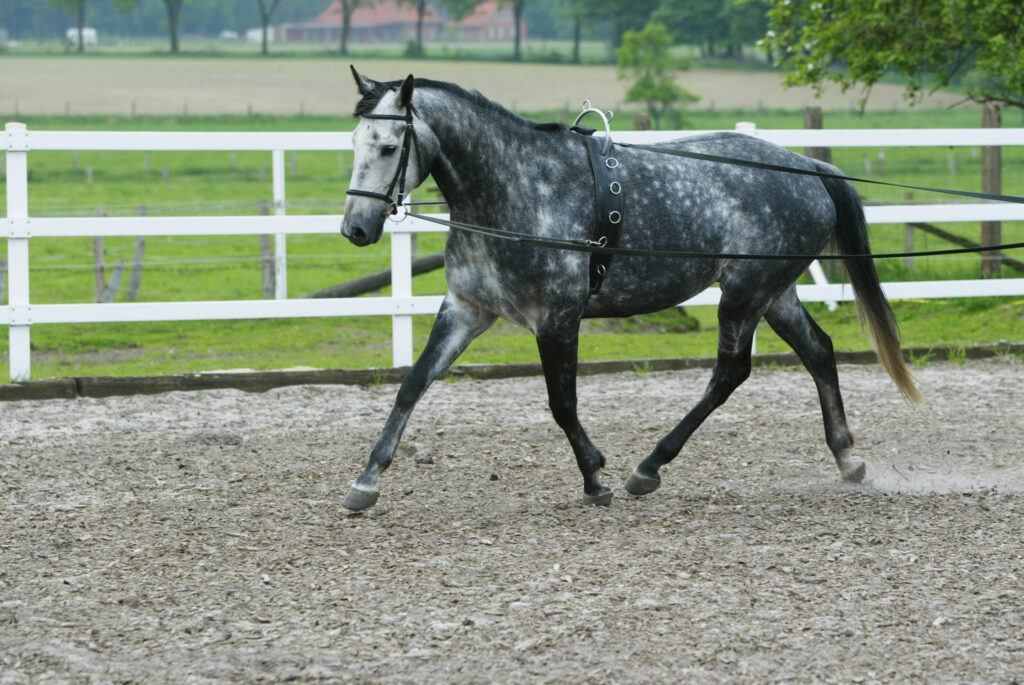
To address weakness, Ursini recommends using ground poles and transitions within and between gaits to promote whole body balance and fitness. Long-lining removes the rider component but enables incorporation of transitions, collection, bends, and lateral work. EquiCore resistance bands also promote symmetry and activation of the multifidus muscles. Asking a horse to step onto 4-by-4 pedestals at different heights (8” and 12”) stimulates body control and forces him into a base-narrow posture; this exercise challenges postural control and strength. When available, an underwater treadmill is a valuable tool to help remedy topline weakness.
Ursini recommends implementing at least 30 days of in-hand work before asking for ridden work under saddle. The timing depends on the severity of a horse’s topline dysfunction as well as a rider’s ability. “Long and low” exercises such as training level dressage help engage the hind end. Transitions exercise the back to engage; leg yield (not side pass) also helps with bending; spiral in and out on circles further activates the back muscles.
Sports medicine coverage from the 2025 AAEP Convention is brought to you by Dechra.
Related Reading
- Incorporating Elastic Therapeutic Tape Into Equine Practice
- Disease Du Jour: Equine Rehabilitation Modalities
- Conservative Management and Rehabilitation Strategies for Equine Back Pain
Stay in the know! Sign up for EquiManagement’s FREE weekly newsletters to get the latest equine research, disease alerts, and vet practice updates delivered straight to your inbox.