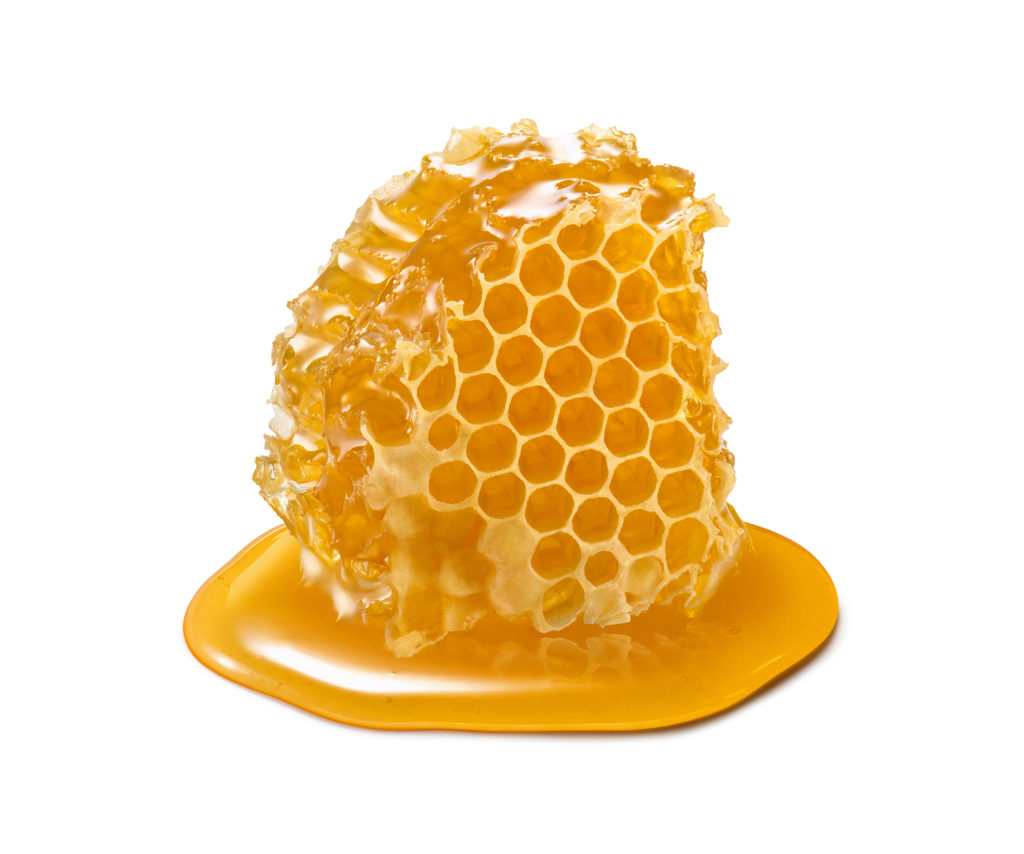
Medical-grade honey (MGH) has been introduced as a protective measure against surgical site infections in equine surgery, but the effect on suture material has not been investigated. The aim of the in vitro experiment was to evaluate the effect of MGH on the tensile properties of three synthetic absorbable suture materials.
Ten strands of Polydioxanone USP 2 (PD2), Polyglactin 910 USP 2 (PG2) and Polyglecaprone USP 2-0 (PC2-0) were incubated for 1, 7, 14, 21 and 28 days in MGH, phosphate-buffered saline, equine plasma and medical-grade honey mixed with equine plasma. Mechanical testing was performed recording maximum load at failure (N), strain at failure and Young’s modulus (N/mm2).
PD2 in MGH had a significantly higher tensile strength compared to PD2 in equine plasma (p < 0.05, mean difference (md) = 16.95 N, CI 95% (9.19–24.70 N)) and phosphate-buffered saline (p < 0.05, md = 14.48 N CI 95% (6.73–22.23 N)) on day 7 and the remaining time points. PG2 incubated in MGH had a significantly higher tensile strength compared to equine plasma (p < 0.05, md = 69.28 N CI 95% (64.16–74.40 N)) and phosphate-buffered saline (p < 0.05, md = 56.90 N CI 95% (51.78–62.02 N)) until day 28. PC2-0 incubated in MGH had a significantly higher tensile strength compared to equine plasma (p < 0.05 md = 12.40 N CI 95% (4.59 N–20.20 N)) and phosphate-buffered saline (p < 0.05 md = 11.23 CI 95% (3.42–19.03 N)) on day 7 and the remaining time points.
Bottom Line
Medical-grade honey did not negatively affect the tensile strength of the suture material and can safely be applied in contact with suture materials commonly used in equine surgery.