Mesh implants can elicit undesirable effects in horses because of tissue reaction to the foreign material. These include surgical site infection, intestinal adhesions, peritonitis risk, and possible hernia or evisceration from dehiscence. Surgical correction of hernias relies on mesh materials. However, equine surgeons have not reached a consensus on whether synthetic mesh or animal biomaterial is the better choice.
Study: Efficacy of Synthetic Polyamide Surgical Mesh
In a recent study, researchers in Brazil evaluated the efficacy of a synthetic polyamide (nylon) surgical mesh implanted over the oblique external abdominal muscle of the flank. They chose polyamide for the study because when used in sutures, it causes a low tissue reaction, does not favor microbial growth, is at low risk for rejection, and is nonabsorbable, which helps it maintain its strength over time—especially important for abdominal wall repair.
The study included six healthy horses. The researchers measured blood counts and plasma fibrinogen before the implantation and serially through 60 days. They also conducted ultrasound exams for the first three days post-op and then serially through Day 60. At six months post-op, tissue of the implant region was obtained for histopathological examination.
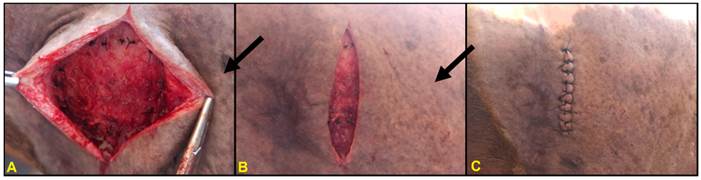
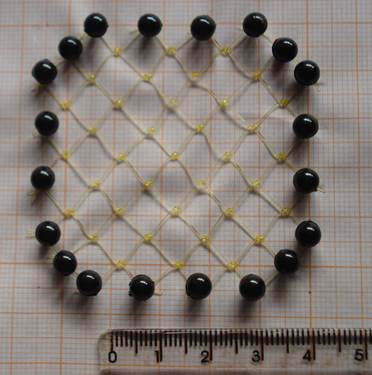
The mesh used in this experiment was hand-made from polyamide thread and then sterilized. The mesh was placed over the external abdominal oblique muscle in the flank and sutured to the muscle with polyamide thread. Skin was also closed with polyamide thread. Following surgery, the horses received penicillin and an NSAID for three days. The wounds were cleaned daily with povidone iodine and sutures removed at Day 12.
Study Results
The results are promising:
- There were no hematologic or fibrinogenic changes associated with the mesh.
- Horses did not develop edema, erythema, or pain at the implant site.
- There was no elevation in rectal temperature.
- There was no secretion around the wound margins during the 60 days of evaluation.
- All the sutures held, and the skin healed well with hair growing over the scar.
- Ultrasound exams did not identify implant rejection. By Day 60, the mesh was surrounded by irregular tissue that showed organization of scar tissue around the implant.
- Histopathologic examination at six months post-op demonstrated dense subcutaneous and vascularized fibrous tissue around the implant with smooth dermis and hypodermis integrated with the mesh.
“The polyamide tissue serves as a ‘sketch’ or ‘mold’ for a fibrous tissue of the same shape that surrounded it,” the authors reported. “The polyamide mesh directs growth of a fibroblastic scar tissue of dense connective tissue on the mesh.”
Take-Home Message
In this study, polyamide mesh implants did not cause systemic or local reactions or tissue rejection. Horses did not experience edema, erythema, pain, temperature elevations, or wound secretions associated with the implant. The surgical site healed well by first intention while the implant was well integrated into the subcutaneous tissues and attached muscles.
Reference
Brito PHS, Ferreira MA, Vargas THM, et al. Polyamide surgical mesh on the flank of horses. Ciencia Rural Santa Maria 2025, v. 55: 12, DOI: 10.1590/0103-8478cr20240082
Related Reading
- Silicate Dressing Improves Healing of Equine Distal Limb Wounds
- Preventing Incisional Infections Following Colic Surgery
- Evidence-Based Antiseptics & Dressings for Equine Wounds
Stay in the know! Sign up for EquiManagement’s FREE weekly newsletters to get the latest equine research, disease alerts, and vet practice updates delivered straight to your inbox.