Resistance bands are one of many options available for managing and rehabbing lameness in horses. The objective of using resistance bands during exercise is to alter abnormal gait patterns and help redistribute limb weight and manage pain.
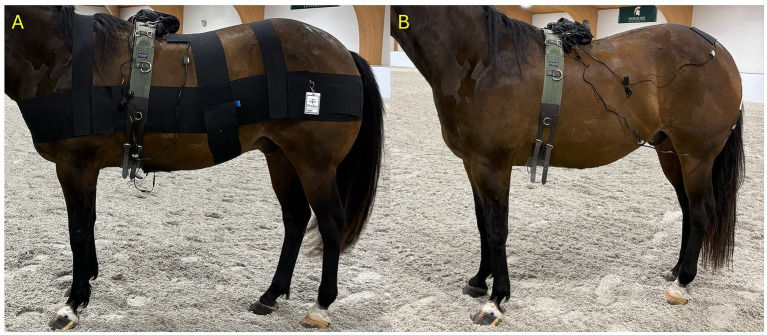
In a recent study, researchers from the Michigan State University College of Veterinary Medicine evaluated nine lame adult horses (AAEP scale Grade 3/5 from osteoarthritis) with and without a whole-body resistance band wrap (RBW, the Eagle ProSix equine system). This system is designed to improve proprioception, gait symmetry, posture, and muscle function as well as relieve stress and anxiety. For the assessment, they used objective gait analysis, acoustic myography, postural analysis, gait kinematics, and salivary cortisol concentrations.
All horses in the study wore an RBW fitted specifically to their individual physical dimensions. The horses served as their own controls, with the researchers comparing measurements obtained when the horses were wearing the RBW with those obtained when they were not. The researchers’ findings included:
- No difference in lameness, velocity, or stride length between horses wearing and not wearing the RBW.
- Cortisol levels were lower at 45 minutes when wearing the RBW. The study authors noted that the wrap’s whole-body squeeze design might aid in proprioception and stress relief.
- When wearing the RBW, muscle efficiency of the semitendinosus muscle decreased, possibly because of muscle fatigue or reduced use from wrapping the band around these hindquarter muscles. All other muscle functions remained within normal limits.
- When wearing the RBW, range of motion increased in the carpal, tarsal, and shoulder joints.
- Back angle increased with the RBW due to improved topline posture with activation of core abdominal muscles.
Take-Home Message
The authors reported that the RBW “has short-term effects on decreasing cortisol, improving joint range of motion, and decreasing semitendinosus muscle function.” They noted no change in lameness after short-term application of the RBW. Using the RBW in conjunction with traditional treatment modalities, such as systemic medication, intra-articular therapies, and rehabilitation, might help improve a horse’s locomotion and comfort while exercising, at least for the short term.
Reference
Boger B, Naraian M, Hernandez E, Eaton A, Rockburn R, Tillman I, Payne S, Yob C, Panek C and Manfredi JM (2026) Effects of a rehabilitative whole-body resistance band wrap on equine gait, posture, cortisol, and muscular function. Front. Vet. Sci. 12:1738766. doi: 10.3389/fvets.2025.1738766
Related Reading
- Therapeutic Exercises for Horses With Topline Dysfunction
- Incorporating Elastic Therapeutic Tape Into Equine Practice
- Disease Du Jour: Equine Rehabilitation Modalities
Stay in the know! Sign up for EquiManagement’s FREE weekly newsletters to get the latest equine research, disease alerts, and vet practice updates delivered straight to your inbox.