This article originally appeared in the Fall 2026 issue of EquiManagement. Sign up here for a FREE subscription to EquiManagement’s quarterly digital or print magazine and any special issues.
The equine intestinal microbiome is home to an estimated 1015 bacterial cells, predominantly found in the hindgut. While the microbiome, defined as the live microorganisms and their genetic contributions, is highly variable across individual horses, the functional genetic contribution is almost 100%. Some of the equine intestinal microbiome’s main functions are related to fermenting fiber for energy production, pathogen defense, developing and supporting the host immune system, maintaining the health of the colonocytes to minimize leaky gut, modulating inflammation, and driving the gut-brain and gut-lung axes.
“Given the microbiome appears to be a jack of all trades, it is unsurprising that dysbiosis not only serves as an indicator of current health status but also contributes heavily to the development of myriad important health conditions,” says Kathleen Crandell, PhD, an equine nutritionist with Kentucky Equine Research.
In horses, she says, leaky gut, adult and foal diarrhea, colitis, colic, laminitis, asthma, and equine grass sickness are all associated with dysbiosis.
Recent research in both equine and human medicine takes things a step further, suggesting the intestinal microbiome can actually predict disease. In this article, we’ll present data regarding microbiome disease prediction in horses and discuss methods for improving microbiome health and stability.
Using the Intestinal Microbiome to Predict Disease in Humans
The concept of using the microbiome to predict disease is not new. In 2017, Liang et al. conducted a metagenomics analysis of the fecal microbiome and identified noninvasive markers of colorectal cancer. “Stool-based colorectal cancer-associated bacteria can serve as novel noninvasive diagnostic biomarkers for colorectal cancer,” they wrote.
In 2022, Yang et al. explored using a combination of 16S microbiome data and metabolomics data to improve disease prediction accuracy, specifically for insulin resistance.
“A reliable microbiome-based prediction model could have immediate values in disease diagnosis and treatment responses by prediction,” they noted.
In that study, “omics” data were collected longitudinally from patients diagnosed with prediabetes over four years. Yang et al. collected and analyzed a total of 720 fecal and blood samples. Using this combined approach, they reported the accuracy for predicting insulin resistance was 84.62%.
Other studies report on disease prediction using a variety of techniques. Overall, the take-home message is that while this field is worth investigating further, additional research is needed on the optimal data types for predicting host phenotype from metagenomic/genomic data. It’s also important to appreciate that disease prediction is not synonymous with causality.
Data on Early-Life Gut Microbes’ Influence on Horse Health
In horses, Leng et al. (2024) reported important associations between early-life bacterial community structure, health events, and future athletic performance.
“We found that gut bacterial diversity at 28 days of age could actually predict the risk of respiratory disease later in life and found specific bacterial families associated with health and performance in adulthood,” reports lead researcher Chris Proudman, PhD, Professor of Veterinary Clinical Science, School of Veterinary Medicine, Faculty of Health and Medical Sciences, University of Surrey. He is also the leader of the Horse Microbiome Research Group focused on understanding how microbe communities interact with their equine hosts and influence health, welfare, and athletic performance.
In their study, Proudman’s team collected fecal samples from 52 foals at 2, 8, 14, 28, 60, 90, 180, 272, and 365 days of age. They did not include foals born by caesarean section or assisted delivery or from mares treated with antibiotics in the three-month period prior to parturition. Foals were kept at the stud farm and weaned at approximately five months of age. Yearlings (between nine months and one year) were moved to training facilities until they began race training as 2-year-olds. Health updates were provided weekly regarding any veterinary investigations or treatment for orthopedic, soft tissue, respiratory, or gastrointestinal disease/injury. The researchers also collected racing performance data, including finishing position, total prize money, and total starts/placings/wins. Fecal samples were analyzed using standard 16S rRNA gene sequencing methodologies.
As expected, bacterial diversity (i.e., variety and abundance) was low at the early time points, increasing until Day 60. The most abundant bacterial families in foal fecal microbiota at two days of age were Enterobacteriaceae and Bacteroidaceae. Bacteria from the orders Bacteroidales and Clostridiales were most abundant at later time points but were in low abundance early in the foals’ lives. In contrast, bacterial families that were not present early in life but increased in abundance as the foals aged included Spirochaetaceae and Fibrobacteraceae.
“Although our study did not look at bacterial function, it is reasonable to assume that some of the ‘succession’ in bacterial community structure is related to the increasing need to digest fiber as the foal becomes older,” says Proudman.
And while the presence of Clostridiales may raise some eyebrows, Proudman says, “The Clostridiales order of bacteria contains many different species, most of which live in soil and in the guts of animals. They ferment plant fibers and are therefore important for horse digestion. Some species also produce botulism and tetanus toxins, but these are relatively uncommon.”
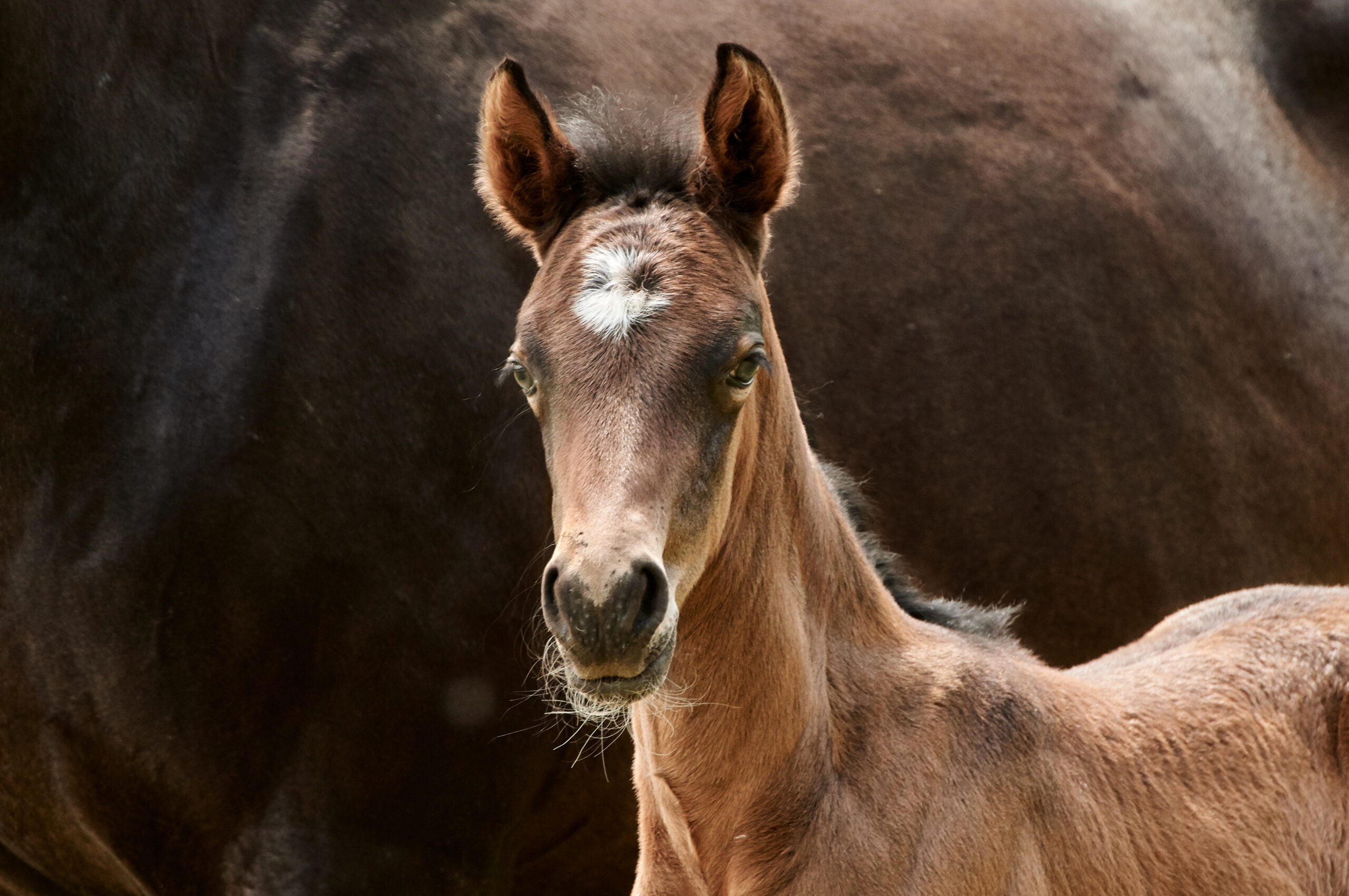
In terms of disease prediction, higher bacterial diversity (measured using seven different techniques) at 28 days was significantly associated with reduced risk of respiratory disease later in life. This association persisted at both 90 and 365 days.
“Our data showed that foals in the top 40% of gut microbial diversity at 28 days old had a significantly lower risk of subsequent respiratory disease compared to foals in the lowest 40%,” says Proudman.
Increased bacterial diversity at 28 and 60 days was also significantly associated with a decreased risk of soft tissue disease, and increased bacterial diversity at 272 days of age was significantly associated with a decrease in orthopedic disease.
“As above, foals within the top 40% of gut microbial diversity versus the lowest 40% diversity had significantly lower risk of disease,” Proudman says. In other words, for respiratory, soft-tissue, and orthopedic health events, rate of disease is significantly higher in horses that had lower bacterial gut diversity early in life.
Proudman’s team also evaluated the effect of early gut microbial diversity on future athletic performance. “Significant positive associations were noted between fecal microbial diversity at 28 days and official rating, average prize money earnings, and average race placings even after controlling for confounders,” he relays.
They found that foals treated with antimicrobials in the first month of life had significantly lower fecal bacterial diversity at 28 days of age. Not surprisingly, average prize money in their subsequent racing careers was significantly lower.
The microbial structure at 28 days appears to be a key time period that the researchers explored further. Foals with low and middle diversity (based on the Shannon diversity index) had fecal microbiomes dominated by Ruminococcaceae, and many fecal samples with low diversity comprised over 40% of a single bacterial family.
“These data simply show that Ruminococcaceae were very dominant in the guts of foals with low overall gut bacterial diversity and that changes in the abundance of the bacterial families Bacteroidales, Prevotellaceae, and Planococcaceae had the most influence on community structure at this age,” explains Proudman.
Delving deeper into the data, Proudman et al. found a relative abundance of Pseudomonadaceae at eight days of age was significantly associated with respiratory disease later in life. Similarly, a relative abundance of Streptococcaceae at eight days of age was positively associated with soft tissue injury/disease, and abundance of Rikenellaceae at 90 days of age was associated with gastrointestinal disease.
Specific to racing performance, a higher relative abundance of Anaeroplasmataceae at 28 days was significantly and positively associated with official rating, and a higher relative abundance of Bacillaceae was associated with higher race placings.
“These findings demonstrate significant associations between the gut bacteria of foals and health and performance later in life,” says Proudman. “If these associations are causal, then interventions that optimize the gut bacteria of foals could have long-term health and performance benefits.”
For example, he says, “Current work to identify horse-specific probiotics that will optimize the foal’s gut bacteria early in life offers the prospect of enhancing the health of horses through a simple dietary supplement.”
Modulating the Intestinal Microbiome of Foals
“Dietary manipulation of the developing gut microbiota may promote the growth of beneficial bacteria,” suggested Lindenberg et al. in their 2019 study evaluating the foal’s gut microbiota. However, they provided no further information on how to support the developing intestinal microbiota or maintain a healthy intestinal microbiome once it is established.
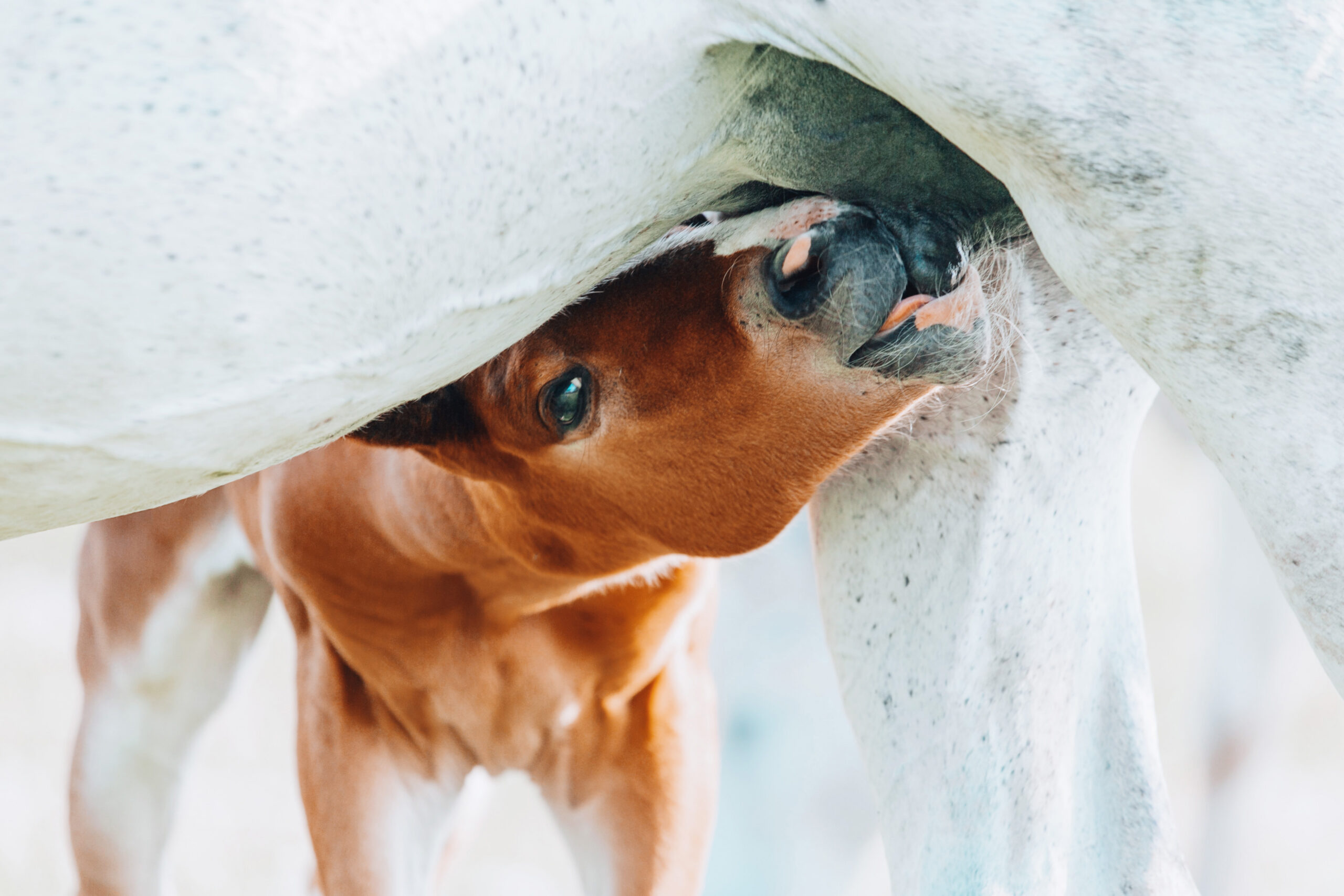
“Building a diverse microbiome in the foal digestive tract starts from the moment they pass through the birth canal and start nursing,” says Crandell. “Further, in the early weeks of life as the foal samples many things in the environment, including their mother’s feces, they are exposed to a huge variety of microbes that may serve them well as their diet shifts from milk only to one high in forage. This evolutionary method of seeding the intestinal microbiome can be interfered with when we try to keep the environment too sterile for the mare and foal. The more the pair are exposed to a natural environment (i.e., out on pasture), the more this transition will get to help the foal develop a diverse microbiome.”
Once the intestinal microbiome is established, which according to multiple sources occurs remarkably early in life, well before weaning, strategies focusing on supporting stability and diversity include keeping the diet close to “natural.”
“This includes supplemental forage and minimal concentrates as well as plenty of time to explore a natural environment,” says Crandell. “Recent research found that semiferal foals raised on grasslands had enhanced diversity of key groups of microbes than domestically raised foals (Tavenner et al. 2020). These data therefore infer that the gut microbiomes of the feral foals will have more stability and digestive capacity.”
Advances in Probiotics
While commercially available and widely perceived as successful (based on gross annual sales), the clinical success of pro-, pre-, post-, and synbiotics remains debated from an evidence-based medicine approach.
“Attempts to adjust the microbiome when dysbiosis occurs with supplemental probiotics have shown minimal benefit and possibly detrimental effects on resolving dysbiosis in the juvenile gastrointestinal tract,” says Crandell.
Kern et al. (2026) went beyond “first-generation” probiotics, which are the ones we are all familiar with containing classical food-derived strains such as Lactobacillus and Saccharomyces spp., for example. Instead, they described “next-generation probiotics” (NGPs) currently being evaluated for clinical use in human medicine. These are products identified using next-generation sequencing and bioinformatics to isolate bacteria with presumptive specific health benefits. Often, they are derived from the gut itself, which according to Kern et al. ensures “better adaptation to the intestinal environment and high abundance, thereby improving their therapeutic scope.”
Further, researchers are looking toward engineered probiotics created via genetic or chemical editing to provide “enhanced therapeutic benefits.”
Taking things one step further, these NGPs can be used as “precision probiotics” where they are selected, tailored, and engineered for individual patients. Precision probiotics might overcome the challenges associated with first-generation probiotics, such as failure to engraft in the host by withstanding colonization resistance and even induction of dysbiosis upon coadministration of antibiotics.
While this field is in its infancy, Kern et al. said, “The emerging NGP field and associated experimental and computational tools that it utilizes increasingly allow researchers to screen for function, model community scaled metabolic interactions, and rationally engineer microorganisms for specific tasks … The future of the field lies not only in predicting which strain works but also in iteratively designing a strain or consortium with a predefined therapeutic function, tailored to the specific microbial landscape of an individual, and targeted to predetermine disease niche while minimizing off-target effects.”
As a word of caution, says Crandell, “At this time, there is no evidence that supplementing foals with pro-, pre-, and/or postbiotics will prevent dysbiosis. The only studies that have shown a positive antidiarrheal effect in foals have used ‘probiotics’ isolated from the mare’s manure. In other words, equine-origin bacterial strains in place of generic strains used in human probiotics.”
Recent work (Bell et al. 2024) on fecal microbial transfer (FMT) found it was safe to use in foals presenting with diarrhea and followed for seven days.
“Although FMT for three days did not improve survival or rate of resolution over seven days compared to foals treated with an electrolyte solution alone, there were indications that FMT improved markers of inflammation and may infer health benefits to the treated foals,” relays Crandell.
This is worth exploring, as FMT in human medicine has reported success rates of over 90% following a single procedure and higher with multiple treatments as needed (Tegegne and Savidge 2025).
In Summary
While links do exist between the microbiome and disease, Tegegne and Savidge say pinpointing causal relationships between the microbiome’s role in either health or disease is challenging due to confounding factors such as genetics, diet, and environment. “Integrating advanced sequencing with epidemiological methods holds promise for precision medicine, paving the way for tailored microbiome-based therapies in disease prevention and management,” they wrote.
In terms of future directions, Proudman says, “As our knowledge and understanding of the horse’s gut microbiome grows, we will be able to identify opportunities to intervene to enhance health and welfare through optimization of the bacterial communities living in the gut.”
Related Reading
- The Hindgut’s Role in Racehorse Health
- Pre-, Pro-, and Postbiotics in Horses: What Does the Evidence Show?
- Butyrate in the Gut Microbiota Might Enhance Equine Performance
Stay in the know! Sign up for EquiManagement’s FREE weekly newsletters to get the latest equine research, disease alerts, and vet practice updates delivered straight to your inbox.