This article originally appeared in the Fall 2026 issue of EquiManagement. Sign up here for a FREE subscription to EquiManagement’s quarterly digital or print magazine and any special issues.
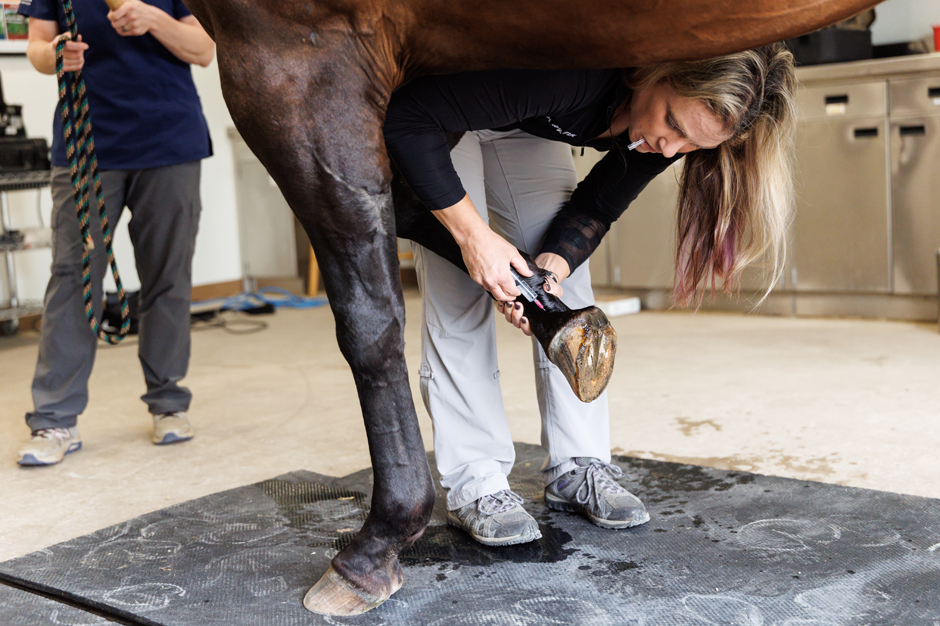
Recognizing and managing pain is an integral component of an equine practitioner’s day-to-day job. For surgical or trauma cases, pain management is often at the forefront of a comprehensive treatment plan, involving injectable opioids and alpha-2 agonists, injectable and oral non-steroidal anti-inflammatory drugs (NSAIDs), and local or regional blocks. But what about nonemergent or chronic cases? Are we truly embracing all the tools we have available and using a multimodal treatment approach?
A multimodal approach uses two or more methods or medications from different classes to reduce pain. The goal is to recruit synergistically acting modalities to provide comprehensive pain relief.
“We’re essentially trying to target as many of the pain pathways as possible,” explains Erin Contino, DVM, DACVSMR, associate professor in equine sports medicine at the Colorado State University (CSU) College of Veterinary Medicine & Biomedical Science’s Equine Orthopaedic Research Center.
A multimodal approach may also permit dose reductions of one or more of the drugs being prescribed. In human medicine, for example, the focus is often on decreasing opioid use. In veterinary medicine, the focus could be decreasing the dose or duration of NSAIDs. Additionally, Contino says she looks for drugs with synergistic effects (e.g., a combination of butorphanol and detomidine), so she can administer smaller doses of each.
“I can use less of both medications and, therefore, decrease the potential adverse effects of both,” she says.
A multimodal strategy might also include nonpharmacologic/physical pain management. A multimodal drug approach combined with nonpharmacologic therapies has long been recommended for horses with osteoarthritis (OA), for instance, to maximize patient comfort.
A multimodal approach isn’t limited to emergency/trauma cases or OA and can be used to manage horses with a variety of acute or chronic pain. “Anything that is hard to treat or is a complex disease process is ideal for multimodal treatment approaches,” says Contino.
Managing Musculoskeletal Pain
Osteoarthritis
Osteoarthritis is an incurable, degenerative, painful, whole-joint disease leading to lameness, decreased performance, and potentially early retirement or even euthanasia. Arantes Baccarin et al. (2022) recently described the array of pharmacologic and nonpharmacologic therapies available for equine OA, including:
- Oral NSAIDs such as phenylbutazone or firocoxib.
- Topical NSAIDs.
- Prudent use of intra-articular corticosteroids such as triamcinolone.
- Viscosupplementation with intra-articular hyaluronic acid (alone or with intra-articular corticosteroids).
- Oral compounds sold as supplements containing glucosamine, chondroitin sulfate, methylsulfonylmethane, unsaponifiable avocado and soybean extracts, polyunsaturated omega-3 fatty acids, type II collagen, among others.
- Intramuscular pentosan polysulfate.
- Regenerative therapies such as ACS, PRP, and stem cells, alone or in various combinations with IA corticosteroids.
- Gabapentin.
- Bisphosphonates for cases with bony involvement (even though it is labeled for navicular syndrome).
- Polyacrylamide hydrogels (2.5% or 4%).
- Rehabilitation therapies, including thermal and laser therapy, manual therapies for joint mobilization, controlled exercise programs, and shock wave therapy.
“Weight management and daily exercise or ‘active rest days’ also play a key role in managing OA,” says Contino.
Laminitis
Great strides have been made in managing laminitis-related pain. At the 2024 American Association of Equine Practitioners Convention, Alonso Guedes, DVM, MS, PhD, DACVAA, professor of anesthesia and pain medicine at the University of Minnesota’s College of Veterinary Medicine, said his multimodal approach to managing the mechanical and inflammatory pain associated with laminitis involves using NSAIDs with tramadol and even IM ketamine. A combination of these medications can decrease pain, inflammation, and the development of pain sensitization and neuropathic pain, as well as modulate cytokines, he said.
Additionally, nerve blocks with local anesthetic agents (e.g., liposomal bupivacaine) can improve comfort, and Guedes recommends nutritional supplementation with omega-3 fatty acids.
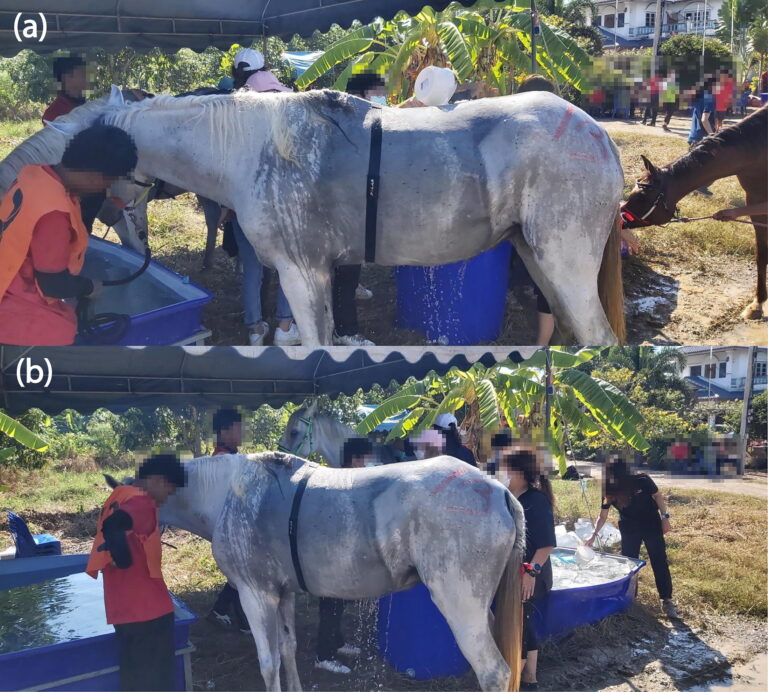
For nonpharmacologic approaches to laminitis pain management, he said cold therapy should be instituted as soon as laminitis is diagnosed. According to a review by Lavado et al. (2023), cryotherapy modulates the inflammatory response, induces profound vasoconstriction, and prevents lamellar damage. Farriery is also key to managing laminitis pain.
Other Painful Conditions to Consider in the Field
Ocular Pain
Horses commonly suffer ocular conditions such as corneal abrasions, ulcerations, and abscesses; primary or secondary uveitis; and glaucoma. These conditions are painful, and that discomfort must be managed in addition to the ocular condition itself. Nicole M. Scherrer, DVM, DACVO, from the University of Pennsylvania’s New Bolton Center, agrees that a multimodal pain management approach to ocular disease is important.
She begins by assessing a horse’s pain using a combination of the horse grimace scale and behavioral pain score as well as a refined equine ocular pain scale (Jodzio et al. 2022; Nannarone et al. 2024).
“The take-away from those papers is that blepharospasm, epiphora, and miosis are the primary eye parameters we use to assess pain as well as behavior traits such being interactive at the front of the stall, willing to stick their heads out when the door is open, and if they are eating well,” Scherrer explains.
For pharmacologic control of ocular pain, Scherrer says, “I then use flunixin meglumine as my main pain management tool and always do twice daily to avoid wind-up pain that can occur when this NSAID is only given once daily. If there are gastrointestinal or kidney concerns, I rely on acetaminophen (20 mg/kg PO q 12 hr) and pregabalin (either q 8 or 12 hr). If a horse is really painful, I will use all three medications together.”
Dental Pain
According to Alexis Leps, DVM, DEVDC-EQ, owner of LepsVetDent in France, “I don’t think dental pain is appropriately addressed in horses. Equids have kept their prey instinct despite domestication, which means they are masters at hiding pain.”
He says studies show that only 25% of horse owners are able to recognize symptoms of dental pain in their horses.
“A lot of horses are only seen once they start to quid or when they have already lost a lot of weight, which are very severe signs of dental pain,” says Leps.
And if a horse has a painful dental condition, it means they are in pain 6,000 to 10,000 times a day—their average number of chewing cycles.
“I’m often asked by owners: Do you think my horse is in pain? To which I like to answer a bit bluntly: Would you be in pain with such bad teeth? I know we should not anthropomorphize too much, but sometimes it helps to put things into perspective, in my opinion,” Leps says.
He says the most important aspect of managing dental pain is alleviating the cause. “Whether it’s an apical infection, periodontitis, severe malocclusion, or EOTRH (equine odontoclastic tooth resorption and hypercementosis), if you don’t address these pathologies, you can prescribe as much analgesia as you want, nothing is going to change,” he asserts.
Even in senior horses, if they don’t have comorbidities such as heart disease or pituitary pars intermedia dysfunction, age is not the limiting factor to address dental pain and dental treatment.
Any dental condition should be managed as a disease to be treated, not covered up with pain-killing drugs, says Leps. Some pain medications used in equine medicine can be dangerous for horses if given long-term. For example, NSAIDs might cause gastric ulcers and are known to be nephrotoxic in some cases.
For field extractions, Leps recommends practitioners take a multimodal approach to performing pain- and stress-free extractions using a combination of locoregional and local anesthesia, alpha-2 agonists mixed with opioids, and NSAIDs pre- and postoperatively, often meloxicam.
Gastric Pain Secondary to EGUS
Ben Sykes, BSc, BVMS, MS, MBA, DACVIM, PhD, FHEA, of BW Sykes Consultancy, in Coffs Harbour, Australia, recently described pain associated with EGUS in an article he cowrote with Klink et al. (2025). “Diseases of the lining of the stomach can be painful in affected horses,” they wrote, adding that “pain-based problem behavior has increasingly been recognized as a primary presenting complaint for horses with EGUS.”
Additionally, 24-hour video recordings of horses in one study (Torcivia and McDonnell, 2024) revealed “what appears to be an observable behavioral signature of equine gastric discomfort.” Such behaviors included frequent nuzzling, swatting, nipping, and/or gazing focused on the abdomen just behind the elbow and, less commonly, deep abdominal (downward doglike) stretches, often within the context of eating, drinking, and/or anticipating feeding. In their study, the researchers found that 24 of 30 horses with gastric discomfort behaviors were diagnosed with either gastric ulcer disease and/or gastric impaction.
“These results confirm our long-held clinical impression of a behavioral signature for gastric discomfort in the horse,” they concluded.
While EGUS is believed to be painful, the current treatment paradigm does not include any form of direct analgesia.
“The approach to pain management is indirect, focused primarily on removing the inciting pain trigger using omeprazole (to reduce acid), sucralfate (to form a protective coating over glandular ulcer beds), and specific supplements containing coating and buffering agents (to provide physical protection),” says Sykes.
Used appropriately, this approach can be highly effective, but long-term use, especially of coating and buffering agents, can be necessary in chronic cases.
Affected horses can also benefit from general stress reduction through environmental modification and the implementation of specific behavioral modification strategies. Sykes and colleagues suggest that despite pharmacologic management, “pain-based problem behavior can persist because of learnt, anticipatory responses. In such cases, behavior modification in the form of specific training might be needed to change horse behaviors that have developed in response to EGUS.”
Additional Thoughts: NSAID Sparing and Acetaminophen
Non-steroidal anti-inflammatories are one of the most commonly administered pain medications in equine practice, frequently used to treat gastrointestinal, muscular/orthopedic, and perioperative pain, corneal ulcers, uveitis, and laminitis.
Alas, they have a narrow margin of safety. The most common side effects are gastroduodenal ulceration, right dorsal colitis, and renal papillary necrosis, even at recommended doses, highlighting the need for a multimodal analgesia approach.
Recognizing potential complications associated with NSAIDs, Scherrer says, “I try to taper off the flunixin meglumine when possible and find that even a tiny dose like 1 mL PO q 12 hr still helps manage ocular discomfort in some horses. It is important to reevaluate PCV/TP and creatinine in these patients.”
Despite the concerns associated with NSAIDs, Carli and Fielding (2025) report that long-term (over multiple years) administration of firocoxib, primarily for managing OA, had minimal hematologic alterations compared to horses not receiving firocoxib. Being a COX-2 inhibitor, firocoxib is touted as a safer option than phenylbutazone; however, one NSAID’s safety cannot be extrapolated to another.
As an alternative or adjunct to NSAIDs, veterinarians are increasingly recommending acetaminophen.
Concluding Recommendations
Successful multimodal pain management stems from equine practitioners’ recognition of painful conditions using various pain scales. In addition, it’s the practitioner’s role to educate clients about the need for more than one medication despite the potential added expense and work to prepare and administer them.
“We know that the majority of monotherapies are rarely going to cover all our bases,” says Contino. “The different pain pathways and different tissue structures (e.g., bone, cartilage, synovium) will respond to different medications, and we should be open-minded to all the avenues that can help manage these horses.
“Most individual medications can’t fully treat most musculoskeletal conditions,” she adds. “So, if I am able to get a little improvement from a variety of directions and I put them all together, then it is a significant improvement.”
In addition to pharmacological treatment, it is important to consider the behavioral and mental impacts of disease.
“This allows us to attack it from both ends: Addressing the cause of the pain through medical treatment and addressing the impact of pain through environmental and behavioral management,” says Sykes. “This approach can be applied to any chronic pain-based disease to improve the overall welfare of the horse.”
Related Reading
- Updates on Treatment of Equine Gastric Disease
- NSAIDs & Equine Osteoarthritis: Best Practices for Efficacy and Safety
- A Comparison of Cryotherapy Techniques to Treat Laminitis
Stay in the know! Sign up for EquiManagement’s FREE weekly newsletters to get the latest equine research, disease alerts, and vet practice updates delivered straight to your inbox.