During a presentation at the 2025 American Association of Equine Practitioners Convention, Florian Geburek, Prof. Dr. med. vet, DECVS, DECVSMR, from Clinic for Horses, University of Veterinary Medicine Hannover, in Germany, presented his in vivo experience with an innovative instrumented hoof boot (IHB) for gait analysis.
Kinetics and Kinematics
To begin, Geburek defined kinematics as the determination of body position at a specific time. He explained that acceleration and velocity can be evaluated via inertial measurement units (IMUs) and body or hoof-mounted sensors.
“In contrast, kinetics determines forces and masses, such as ground reaction forces (GRFs) and hoof pressure on the ground,” he said. “To date, kinetics can only be evaluated in a stationary or experimental setting.”
Instrumented Hoof Boot
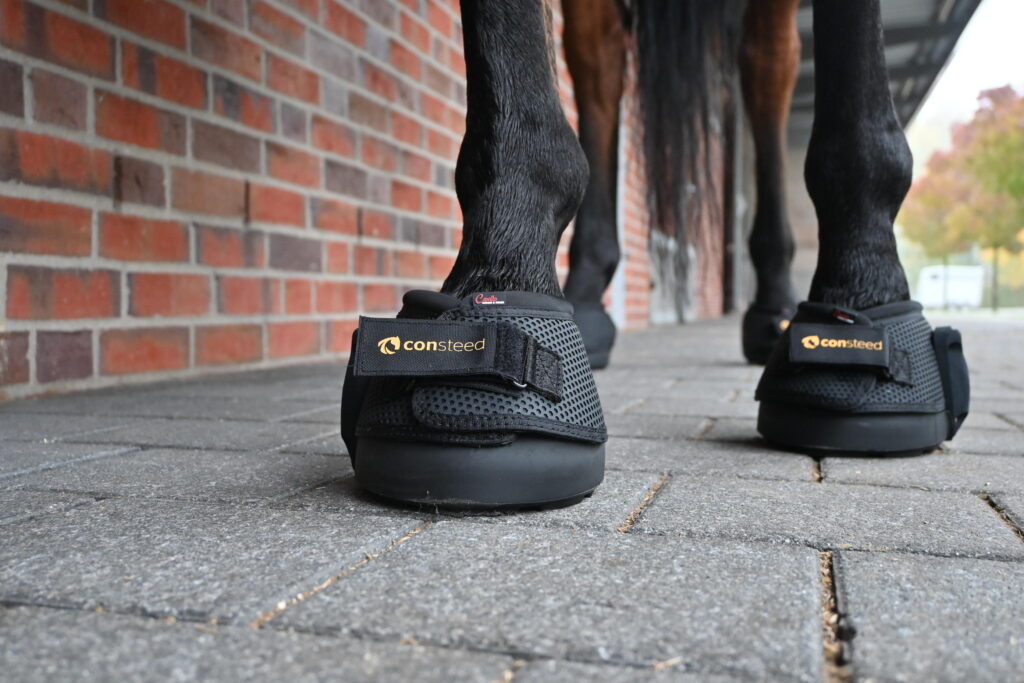
Looking to combine kinetics and kinematics, Geburek’s team recently developed an instrumented hoof boot (IHB) that is fixed to the horse’s hoof. They performed three studies to validate the IHB in an in vivo setting.
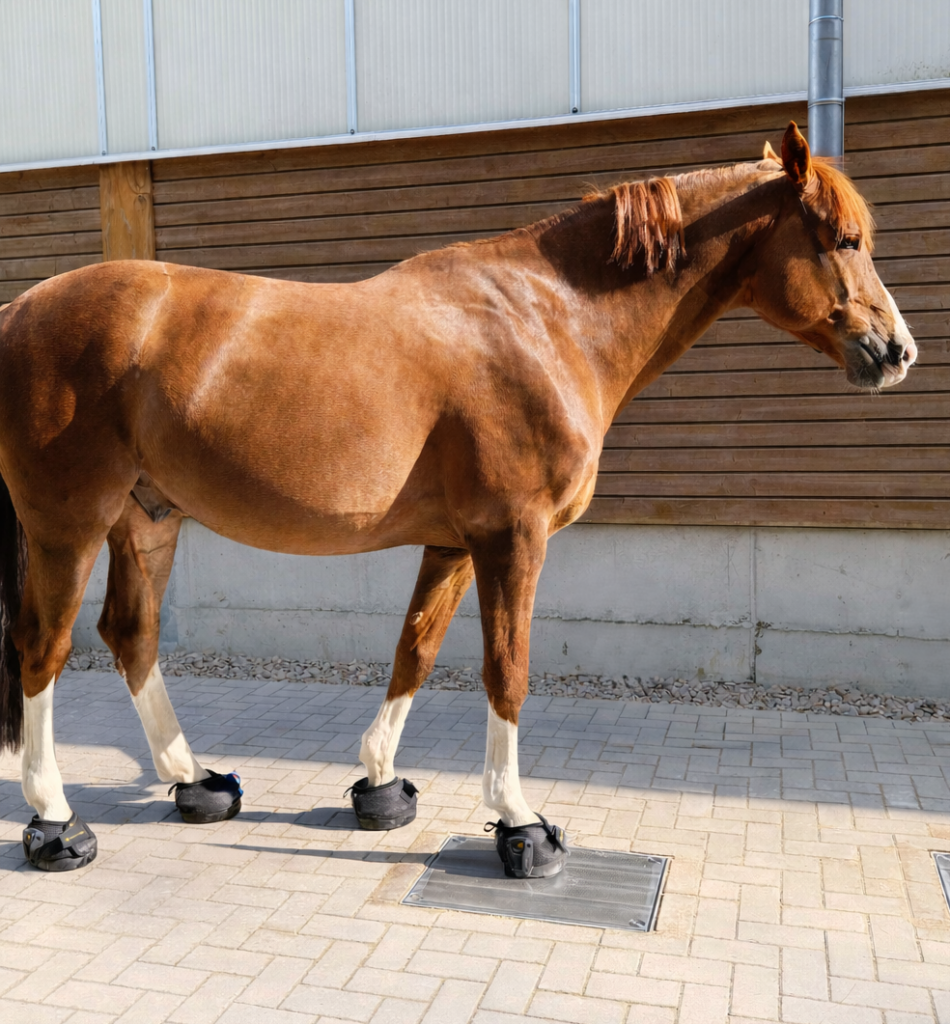
The first was designed to compare hoof pressure determined by the IHB with GRFs measured by force plates embedded in a runway. The force plates measured GRFs in three directions (vertical, longitudinal, and transverse). Twenty-seven non-lame horses were evaluated at a walk and trot, and data were simultaneously recorded from the IHB and force plate.
“There was a high correlation between hoof pressure and vertical GRF at both gaits,” said Geburek.
Next, they used the IHB to objectively detect lameness at the trot and monitor improvement in lameness following local anesthetics. Twenty-six horses were included after baseline evaluation with body-mounted inertial sensors.
At baseline, the IHB confirmed significant differences between the lame and contralateral sound limb for median peak hoof pressure. Following diagnostic analgesia, it did not detect significant differences in median peak hoof pressure between the two limbs, and hoof pressure of the lame limb on the ground increased significantly.
“We concluded that the IHB reliably detected lameness in both fore- and hind limbs, and it was capable of detecting improvements in lameness following diagnostic analgesia,” relayed Geburek.
Finally, the researchers explored whether the IMU in the IHB could be used to differentiate between subphases of the stance phase (i.e., landing, midstance, breakover), especially at the trot.
“The tested IHB allows a distinction between subphases of the stance phase on hard ground at a walk and trot,” Geburek explained. “This is highly relevant for early lameness detection, as induced lameness leads to an increased breakover duration at a walk. Correspondingly, diagnostic analgesia in naturally lame horses causes increased hoof pressure on the ground, especially during breakover. In the future, the IHB app will display the specific vertical hoof pressure data for the respective subphases of the stance phase.”
Final Thoughts
In conclusion, Geburek said, “This IHB is a unique combination of hoof-mounted pressure sensors and IMUs with a strong correlation between hoof pressure and vertical GRF, which is the gold standard of lameness detection. The IHB is suitable for detecting and monitoring gait asymmetry and lameness not only at a trot but also at a walk and thereby has a high potential for early recognition of lameness and monitoring of the equine locomotor system.”
Medical coverage from the 2025 AAEP Convention is brought to you by American Regent Animal Health.
Related Reading
- Disease Du Jour: Objective Lameness Evaluation Technologies
- Harnessing the Power of AI in Equine Practice
- New Technology Might Help Diagnose Trigeminal-Mediated Headshaking in Horses
Stay in the know! Sign up for EquiManagement’s FREE weekly newsletters to get the latest equine research, disease alerts, and vet practice updates delivered straight to your inbox.