This article originally appeared in the Spring 2026 issue of EquiManagement. Sign up here for a FREE subscription to EquiManagement’s quarterly digital or print magazine and any special issues.
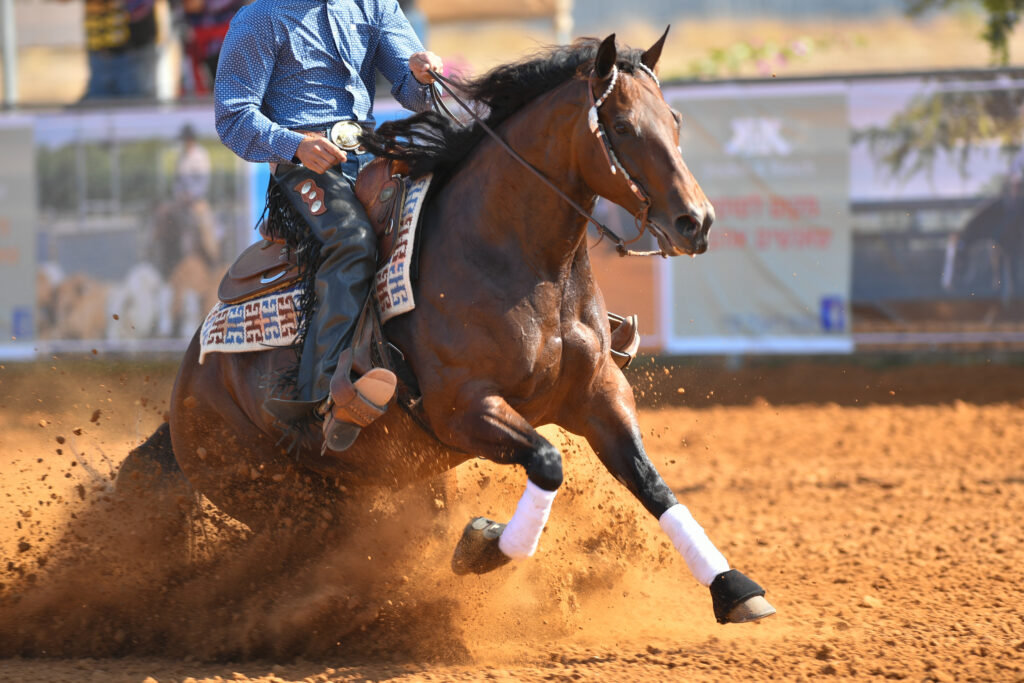
Ben Buchanan, DVM, DACVIM, DACVECC, of Brazos Valley Equine Hospital, in Texas, discussed causes of poor performance in Western sport horses during a presentation at the 2025 American Association of Equine Practitioners Convention. He began by stressing the importance of understanding client expectations and considering whether a horse has the genetics to perform the desired task.
Because the respiratory tract is a frequently overlooked cause of poor performance, Buchanan underscored the value of doing a bronchoalveolar lavage (BAL) as part of a standard exam. Obtain a complete client history, including the extent of a horse’s effort, any noise heard, impressions about prolonged recovery time, or presence of nasal discharge. A thoracic auscultation using a rebreathing bag helps identify subtle sounds that might indicate a problem.
Static or dynamic endoscopy allow the veterinarian to monitor pharyngeal and laryngeal function at different speeds and note changes when a horse fatigues.
Buchanan described the results of an upper airway endoscopy study in 164 exercising barrel horses. Reduction in airway size by half resulted in a 16-fold increase in pressure to maintain airflow. This pressure increase transfers into the chest, causing the horse’s thoracic cavity to work much harder for chest expansion to pull in a sufficient amount of air.
Lower respiratory problems might be caused by upper airway lesions. Buchanan said he also sees lower respiratory tract lesions caused by inflammatory lesions. BAL testing can reveal signs of asthma, exercise-induced pulmonary hemorrhage, or inflammatory airway disease. Thoracic ultrasound and radiographs are useful to further examine the lungs.
Managing Respiratory Problems
Buchanan described management techniques to reduce irritants to the lungs (e.g., avoiding round hay bales; steaming hay instead of just soaking it). He said turnout does not always solve the problem in Western horses because of ongoing airway insults associated with exercising in arena settings. For example, the practice of dragging the arena after every five horses in a barrel race risks aerosolizing dirt.
Buchanan said his approach to respiratory treatment depends on BAL results and repeat examinations. Therapy consists of antibiotics in the presence of lung bleeding to mitigate pleuropneumonia, steroids to treat inflammation, bronchodilators to open airways, and blood pressure medications as needed. Inhaled nebulizers are especially useful to target and reduce mast cells to a non-inflammatory level. Aerosolization with a nebulizer achieves the necessary particle size to reach the alveoli. At this time, Buchanan said more research is needed to consider using regenerative therapies such as platelet-rich plasma or IRAP on the lungs or extracorporeal shock wave to attempt to change lung surface tissue compliance.
Buchanan said in his experience, EIPH often coexists with airway inflammation, and its severity can impact performance. The only two things he has found to be helpful are furosemide and Flair strips.
Muscle Conditions
The muscle system is another area Buchanan recommended assessing when it comes to Western horse performance issues. In Quarter Horses especially, genetic conditions such as polysaccharide storage myopathy (PSSM), malignant hyperthermia (MH), and hereditary equine regional dermal asthenia (HERDA) can impact performance. Other acquired issues like trauma or overexertion also play a role.
PSSM comes in two forms: PSSM1 is a GYS1 mutation that might be mitigated through a low-starch, high-fat diet. PSSM2 testing is not yet well-validated, said Buchanan. A horse showing stiffness after a layoff might have PSSM. He recommended performing a thorough musculoskeletal exam and checking for creatinine kinase (CK) elevation. Do a submaximal exercise test of light work, and check CK levels after four hours. If they’re increased, he said it’s then appropriate to pursue muscle biopsy and genetic testing for PSSM. He also suggests checking for ear ticks, which can mimic PSSM muscular issues.
PSSM is not equal across Quarter Horse breeds. Buchanan said it tends to be less common in racehorse lineage but prevalent in show horses. A consistent and targeted rehab program is important to address muscle pain. Other therapies include muscle relaxants, acupuncture, and body work. Management relies on higher-fat and lower-starch diets, vitamin E, and consistent exercise programs.
Myofibrillar myopathy can also occur, but Buchanan said it’s not universal in Quarter Horse cohorts. A muscle biopsy is necessary to achieve a diagnosis. Horses in need of biopsy investigation are those with no evident cardiovascular or soundness issues but persistent irritability and soreness, especially in the hamstrings.
Neurologic Issues
Veterinarians might consider neurologic issues if a horse’s lameness does not improve with treatment, especially NSAIDs. Rather than being a pain problem, it might be a proprioceptive problem that is often unrepeatable with gait analysis. Congenital issues such as malformation of cervical vertebrae (Wobbler syndrome) can lead to symmetrical ataxia, with the rear limbs worse than the forelimbs. A myelogram helps rule a Wobbler in or out.
An acquired neurologic problem is often related to cervical facet arthritis; spinal trauma; thoracic and lumbar facet arthritis; or overriding dorsal spinous process. If the neck hurts, barrel and cutting horses have distinct difficulties getting their head down to perform. Often, they display accompanying personality changes. An affected horse tends to carry its head to the outside of a circle, has reduced range of motion for flexion, and is sore to palpation over cervical joints.
Radiographs can yield some information, but a myelogram and CT scan might be needed to determine the cause of a problem such as spinal cord compression and/or impingement. Articular facets are visible on CT scan but not radiographs. Once you know where a problem lies, Buchanan said it might be treatable with facet joint injections; systemic Adequan; foraminotomy or basket surgery to stabilize the joint; or kissing spine surgery.
Cardiac Disease
Cardiac problems are not common causes of poor performance in Western sport horses, said Buchanan. Usually, if the heart poses a significant issue, it will be noticeable at rest in the stall. Obtain a good client history looking for indications that the horse fails to improve fitness or resists making an effort, tires easily, and doesn’t recover quickly. Perform cardiac auscultation on both right and left sides of the chest, before and after exercise.
Some arrhythmias do matter. Atrial fibrillation might cause a cutting horse, which tends to work for long periods, to fatigue. It probably won’t affect a calf or team roper with short bursts of activity.
Intermittent ventricular premature contractions might create a ventricular arrhythmia that hits at the wrong time to result in sudden collapse and death. The cause is usually aortic regurgitation.
Look for rhythm and rate disturbances, and use echocardiography to identify murmur location and significance. Diastolic murmurs can be measured with ultrasound: The faster it goes, the louder it is, and even a small hole can be loud. Buchanan said not all heart murmurs affect performance, and sound or intensity do not necessarily indicate anything specific.
Dental Pain
Another area that can impact performance is dental pain. Observe a horse’s bit acceptance, postural collection and flexion under saddle, and willingness to stop and turn. He recommends evaluating a horse’s freedom of jaw motion both laterally and rostrally and checking for soreness of the temporomandibular joint.
GI Health
Gastric ulcers often result in subtle signs of behavior changes, girthiness, or reduced appetite. Gastroscopy is the gold standard to diagnose ESGD from acid exposure. Therapy involves inhibiting acid production using proton pump inhibitor medications and alfalfa buffers in the diet.
Equine glandular gastric disease is also diagnosed with gastroscopy. Angry and inflamed nodules in the pylorus can be managed but not cured. Lesions causing outflow problems at the pylorus can cause pain. Some practitioners have tried electrocautery or laser to cauterize lesions; others use intralesional steroids. It might require 90 days to resolve nodules through diet and management changes. EGGD is managed by reducing stress, limiting NSAID use, and administering misoprostol and sucralfate.
Small intestinal inflammation is often underrecognized but might result in weight loss, lethargy, and recurrent mild colic. A work-up might include a CBC and chemistry panel, ultrasound, fecal exams, and abdominal radiographs looking for sand. A glucose absorption test might also yield information. These cases are managed with diet and probiotics, as well as an appropriate deworming program.
Endocrine Issues, Anhidrosis, and Sleep Disorders
Other causes of poor performance in Western sport horses include endocrine and metabolic issues. Veterinarians can screen older equine athletes for pituitary pars intermedia dysfunction using TRH stimulation testing to measure ACTH. Pergolide and diet and exercise changes are often effective therapies for PPID.
Horses with equine metabolic syndrome and/or insulin dysfunction typically show excess body condition scores and regional adiposity. Buchanan recommends first changing the diet and only considering sodium-glucose cotransporter inhibitor (SGLTi) medications for cases with refractory hyperinsulinemia.
Horses with anhidrosis, which is diagnosable using a terbutaline test, might not sweat well, especially when dehydrated. Management includes cooling strategies, electrolytes, and in some cases a change of location to a cooler climate.
Lastly, Buchanan noted the effect a show circuit environment can have on sleep and, thus, performance. A horse with a chronic sleep deficit tends to fatigue and might collapse. Improve bedding, provide security at the barn, and allow these horses turnout time. Manage barn routines, especially to minimize noise and light, and treat painful conditions that prevent recumbency. Blue-light blocking and circadian rhythm tools exist.
Related Reading
- Non-Orthopedic Causes of Poor Performance in English Sport Horses
- Is Gastric Disease Really to Blame for Equine Behavior Issues?
- Approach to Horses with Poor Performance
Stay in the know! Sign up for EquiManagement’s FREE weekly newsletters to get the latest equine research, disease alerts, and vet practice updates delivered straight to your inbox.